All shelves / Mods / Usage
spending-effort-with-jev
By Yaxin9Luo
spending-effort-with-jev is a Claude Code usage mod by Yaxin9Luo.
Asks TypeSafe's Jev which /effort level a message needs, sends that message to api.typesafe.ai, and switches on your OK.
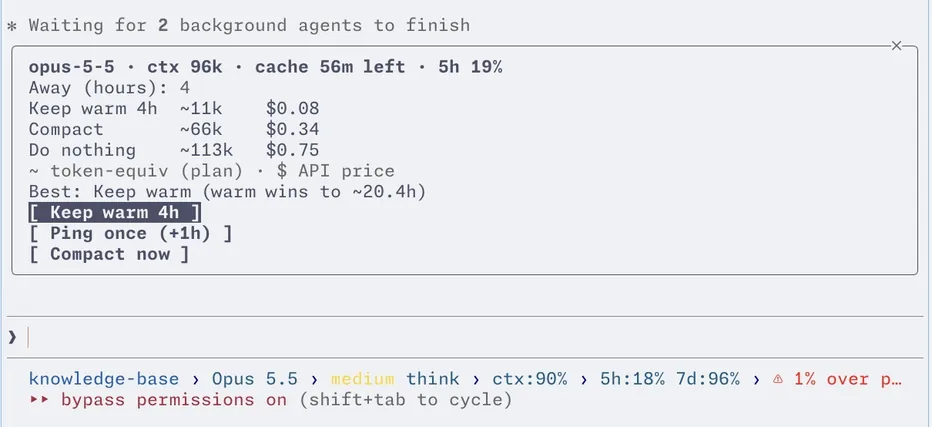
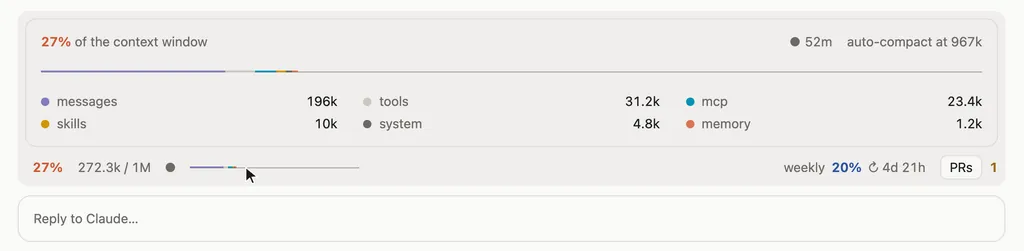
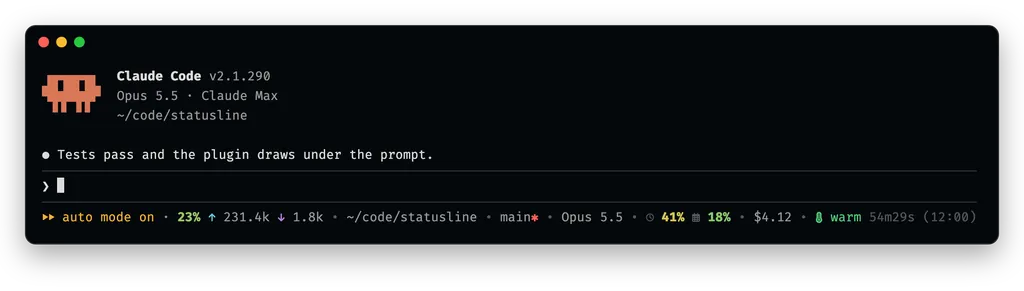
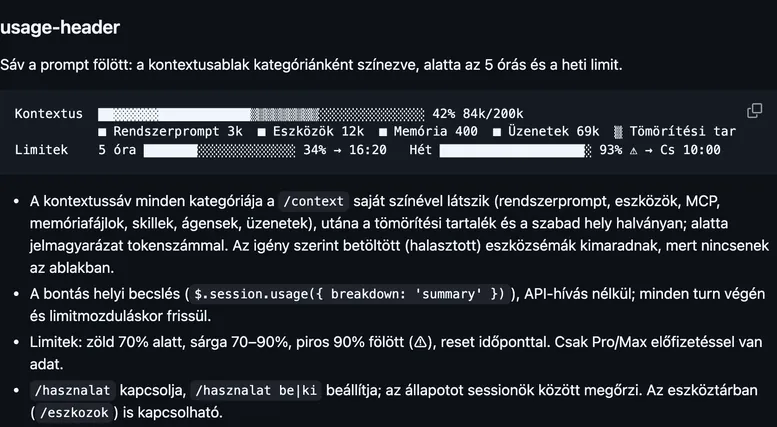
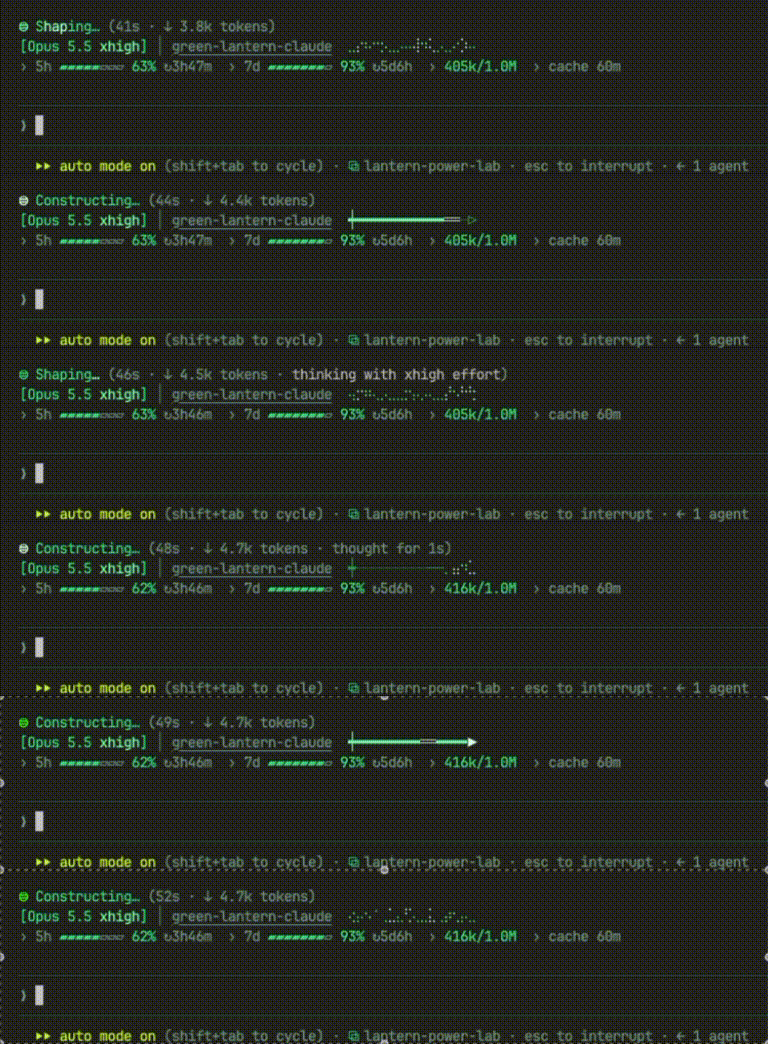
Draws
Install
The marketplace name is spending-effort-with-jev.
/plugin marketplace add Yaxin9Luo/spending-effort-with-jev
/plugin install spending-effort-with-jev@spending-effort-with-jev
It runs inside the Claude Code process. The side panel is only what the author's README names. Read the repo before you install, or run claude plugin validate on the plugin folder.
- Version
- 0.3.2
- License
- MIT
- Repo stars
- 7
- Last change
- 2026-10-15
What it can reach
- Draws in the session
- Reaches the network or an outside service
- Sees tool calls
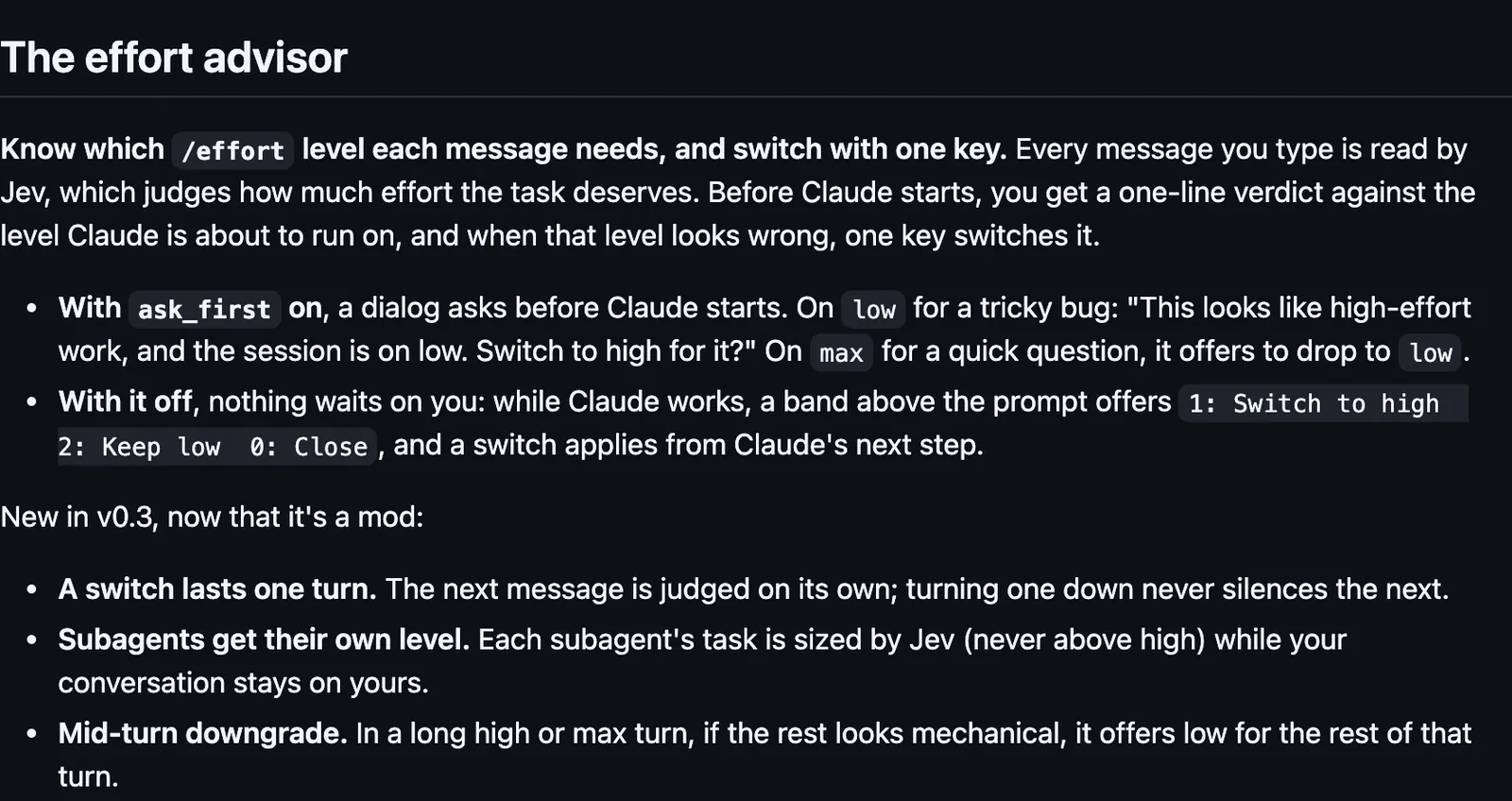
Needs Claude Code 2.1.287 or later and a TypeSafe API key. Paste the key when Claude Code asks. The README says it is kept in secure storage and the plugin reads the key from nowhere else. Then /reload-plugins. The plugin README points at the repository README for the full account. Before a typed message reaches Claude, the mod asks Jev, about 1 second, with a 6 second timeout, for a level and whether the message is an ambiguous hand-off. The message waits for that answer. If Jev does not answer in 6 seconds, the line says no tip this time and the message goes through. Each message you type goes to api.typesafe.ai in full, a giant paste cut to about 20,000 tokens, with Claude's latest reply, its last 3,000 characters, and about 1,500 tokens of older conversation. Your older messages go whole. Claude's older replies are trimmed to their last 1,500 characters. Compaction summaries, Claude Code's own notices, skill instructions, and interrupt markers are left out. Only what you type is judged. Slash commands, background-task notices, scheduled prompts, and messages from other sessions are not. The README says not to install the plugin if that is not OK for your work. A go-ahead such as continue or ok carries no task Jev can see. For those, Claude Code's small model, on your own Claude account, reads the last 6,000 tokens or so and picks the level. That call can wait up to 6 seconds more. A bare ok or continue goes only to that model, not to Jev. The README says Jev bills input tokens at $0.042 per million and output is free. The band shows that cost for today. Claude's own spending is not shown. The line appears when Claude's first request is about to go out, and a gauge above the prompt shows four bars, low to max. The level Claude runs on is solid and the one Jev names blinks. On a model without effort levels, or with a token budget instead of a level, no line shows, and the message is still sent to Jev. A switch needs at least 70 percent of Jev's answer on levels a step or more away. Fits needs at least 70 percent on your level plus unclear. self_tune starts on. After ten answers in one direction, switches you keep taking come a little sooner and ones you keep turning down a little later, between 0.6 and 0.85. ask_first starts off. With it off, nothing waits on you: while Claude works, the band offers 1 to switch, 2 to keep, and 0 to close, and a switch applies from Claude's next step. With ask_first on, a dialog asks before Claude starts. A switch lasts that message's turn. The mod rewrites the level on the requests of that turn. The effort control under the input box keeps showing your setting. Run /effort or pick another level and the mod stops rewriting from the next request. Closing the band or dismissing the dialog changes nothing. subagents starts on. When Claude starts a subagent, Jev sizes its task and that subagent runs on the fitting level, never above high, while the main conversation stays on yours. Subagents started together are announced in one toast. midturn starts on. Once in a long high or max turn, Jev is asked whether what is left is mechanical, and if so the band offers low for the rest of that turn. interview starts on. When a message hands Claude a long run with important things left open, two or three questions come first, drafted by the small model from your message, and your answers go to Claude with it. Up to Claude skips a question. Start now skips the rest. Then max is offered for the run. With interview off, that case is a warning line and a toast instead. quiet and log_decisions start off. language starts at en. zh draws the lines in Chinese. The ledger button, or /effort-ledger, opens a pane of Jev's API cost, the turns on each level, and how often you followed Jev. If an older setup has a statusLine setting that runs bin/statusline.py, the README says to remove that setting, because this version draws the line itself.
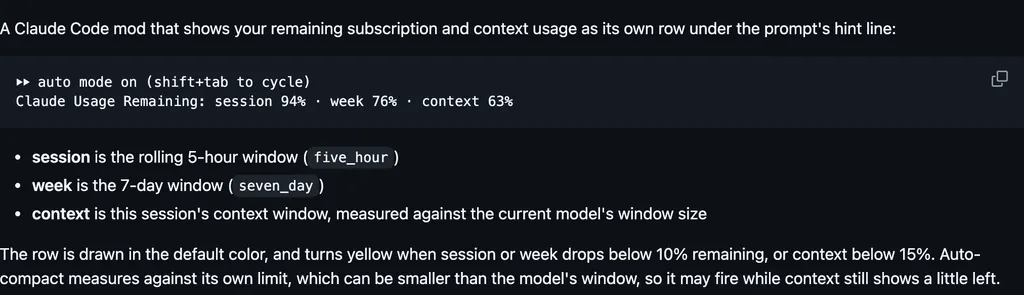
The marketplace name is spending-effort-with-jev. The marketplace also holds elizabeth-progress. This one installs on its own. The effort of the message you just typed is why this page files it under usage. effortless draws a bar above the prompt with the reasoning effort it picked for this prompt, how full the chat is, and how long the prompt cache stays warm. Its author says Haiku 5.5 runs on your own Claude login and picks the effort, and a TypeSafe key is only needed to add Jev. This one asks TypeSafe's Jev for the effort level of each message you type, and offers the switch for that turn. The other jev mods on this page ask Jev other questions.
Demo
What it hooks into
session.startWhen a session startscommand.runWhen you run its slash command/effortprompt.submitWhen you send a promptturn.startWhen Claude starts a turnturn.stepAt each step of a turnturn.completeWhen a turn endsagent.spawnWhen a subagent startsui.renderDraws into the sessionAbovePromptPane
Read from the on() calls in its hook modules. Open its source under Files to check what each one does.
Files
The author's README and source, 4 files. They load when you open them.
Facts
- Author
- Yaxin9Luo
- Category
- Usage
- Marketplace
- spending-effort-with-jev
- Folder
- plugins/spending-effort-with-jev
- Version
- 0.3.2
- License
- MIT
- Repo stars
- 7
- Last change
- 2026-10-15
- Language
- Python
- Files
- 14