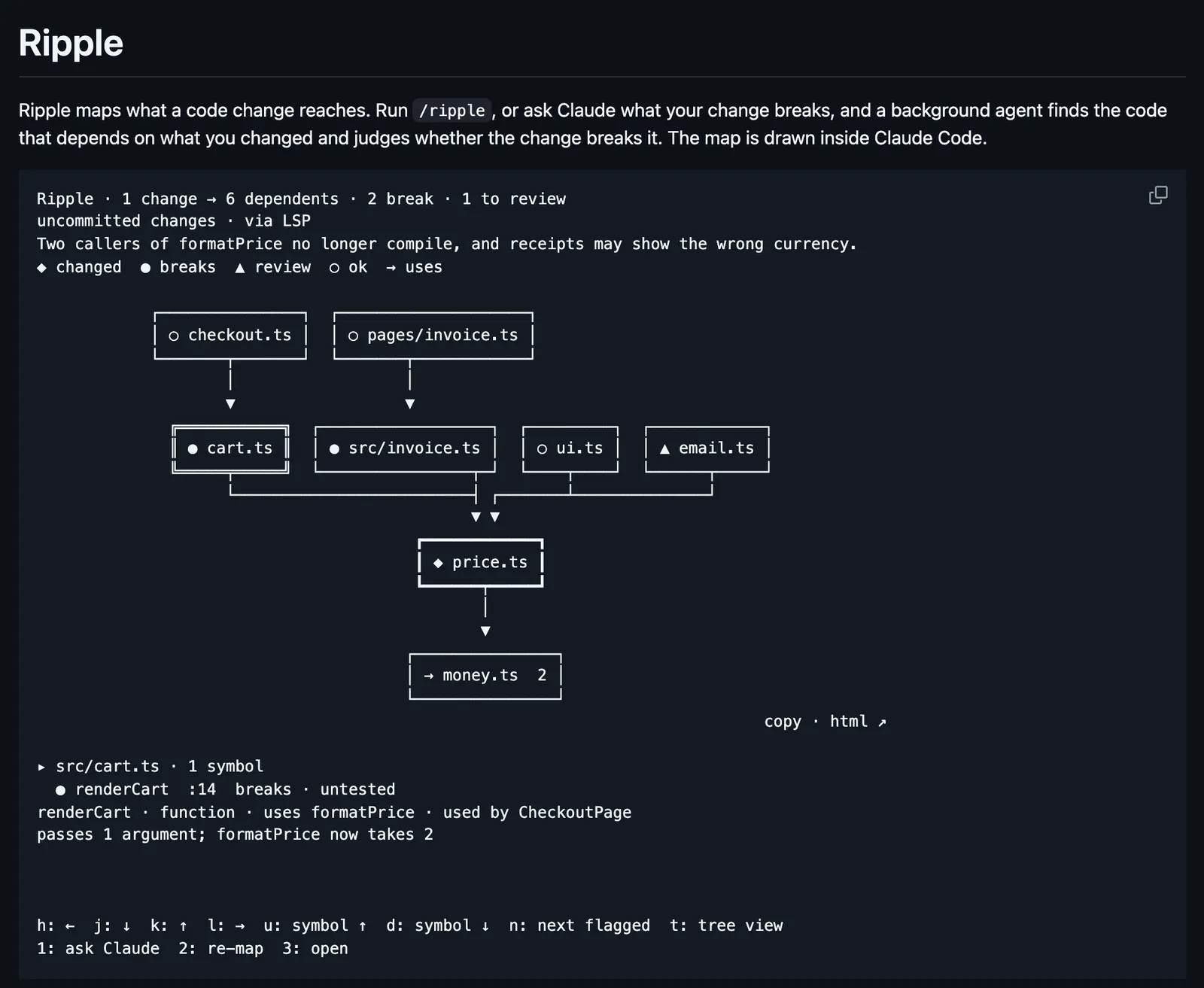
Maps what a code change reaches: a background agent traces the code that uses what you changed, and a pane draws the files, which break, and which to review.
It runs inside the Claude Code process. The side panel is only what the author's README names. Read the repo before you install, or run claude plugin validate on the plugin folder.
Version
0.3.0
License
Apache-2.0
Repo stars
6
Last change
2026-10-19
What it can reach
Draws in the session
Reads this turn's file edits
Sees tool calls
Runs a command when you press
Calls another program on this machine
Run /ripple after a change, /ripple branch for the whole branch, or ask Claude what your change breaks; when Claude asks for a new mapping, Ripple asks you first. Ripple needs git and a commit to compare with. One install brings graphlet too, which draws the graph. The author tested Claude Code 2.1.303, and an older one may not load it. A mapping takes a minute or more and costs what a subagent costs. The mouse works only in the fullscreen layout; the desktop app, the VS Code extension, and the mobile app show the graph as plain text. Where an update needs graphlet and it is missing, run claude plugin marketplace update claude-code-ripple, claude plugin update ripple@claude-code-ripple, and claude plugin install ripple@claude-code-ripple in a shell.
The marketplace name is claude-code-ripple. The marketplace also holds graphlet, which this one installs with it to draw the graph. Seeing what an edit breaks is why this page files it under review. rllvm draws a read-only pane of an LLVM call-graph overlay. time-machine draws a branching timeline of Claude's tool calls with a git snapshot after each change. This one reads the change from git, whoever made it, and has a read-only agent use the language server, your checker where your rules allow it, or text search to find each dependent and judge whether it breaks. The mapper has no Edit or Write tool, and a call that would have asked for your permission is refused. 1 asks Claude about the selected symbol, 2 maps again, and 3 opens it in your editor.
Demo
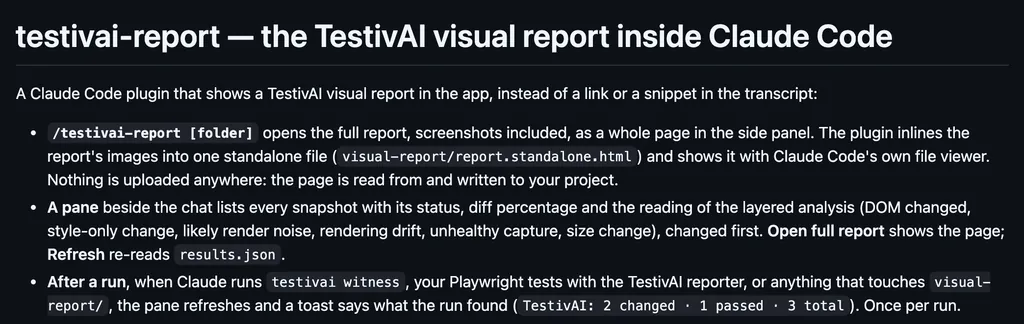
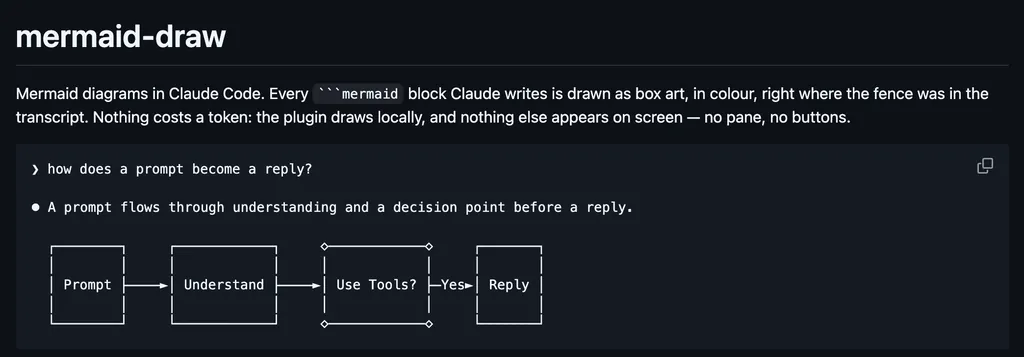
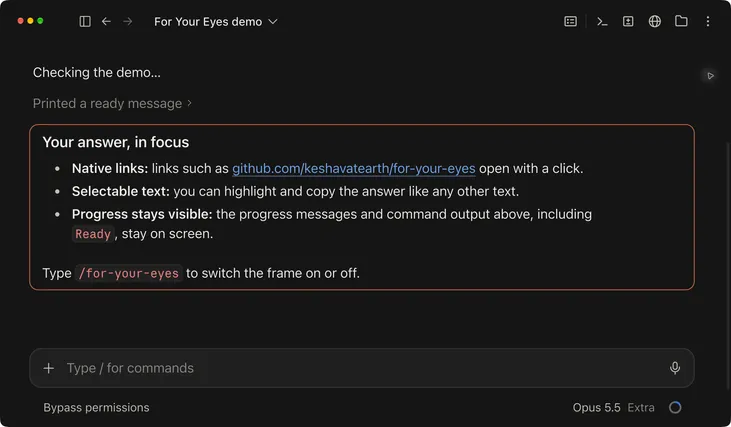
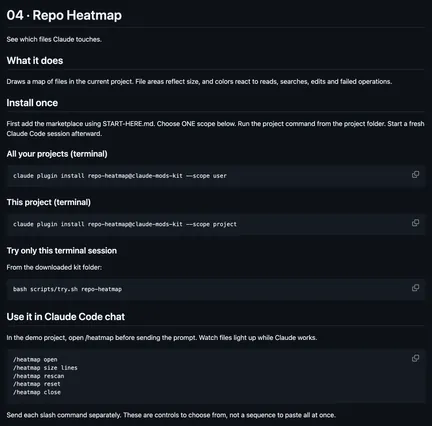
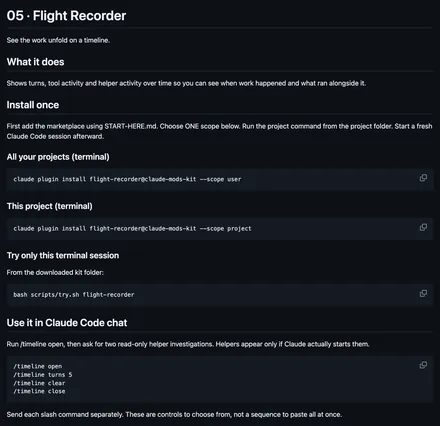
Screenshot of the author's GitHub page.
What it hooks into
session.startWhen a session starts
agent.offerA Claude Code event
command.runWhen you run its slash command/ripple
tool.checkA Claude Code event
tool.callAround a tool call, where it can hold onemcp__ripple__reportmcp__ripple__map
store.getA Claude Code event
prompt.submitWhen you send a prompt
session.endWhen a session ends
ui.renderDraws into the sessionToolUseToolResultPane
turn.completeWhen a turn ends
ui.pressA Claude Code eventPane
ui.messageAdds a message to the session
graphlet.selectA Claude Code event
graphlet.openA Claude Code event
graphlet.keyA Claude Code event
ui.scrollA Claude Code eventPane
Read from the on() calls in its hook modules. Open its source under Files to check what each one does.
Slash commands 1
/rippleMap what your changes reach
Files
The author's README and source, 4 files. They load when you open them.