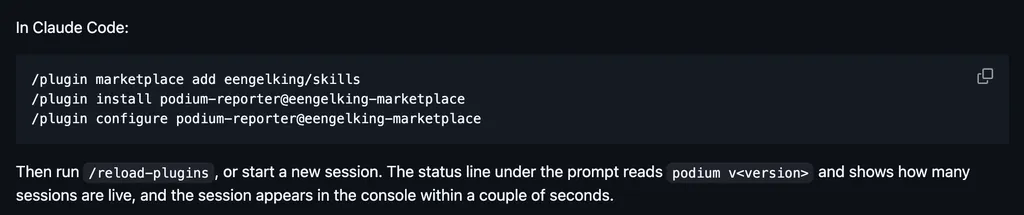
It runs inside the Claude Code process. The side panel is only what the author's README names. Read the repo before you install, or run claude plugin validate on the plugin folder.
Version
2.0.0
Repo stars
3
Last change
2026-10-19
What it can reach
Draws in the session
Calls another program on this machine
Claude Code 2.1.287 or later; the hooks API is early access. It has no threshold of its own: set the auto-compact threshold with claude --autocompact or /autocompact. It needs a git checkout; outside one, or when the fork returns nothing or the draft breaks the format twice, the toast says why and the compaction falls back to Claude Code's own summary. Subagent compactions are left to Claude Code. A hot reload between a /clear and the next prompt loses that handoff.
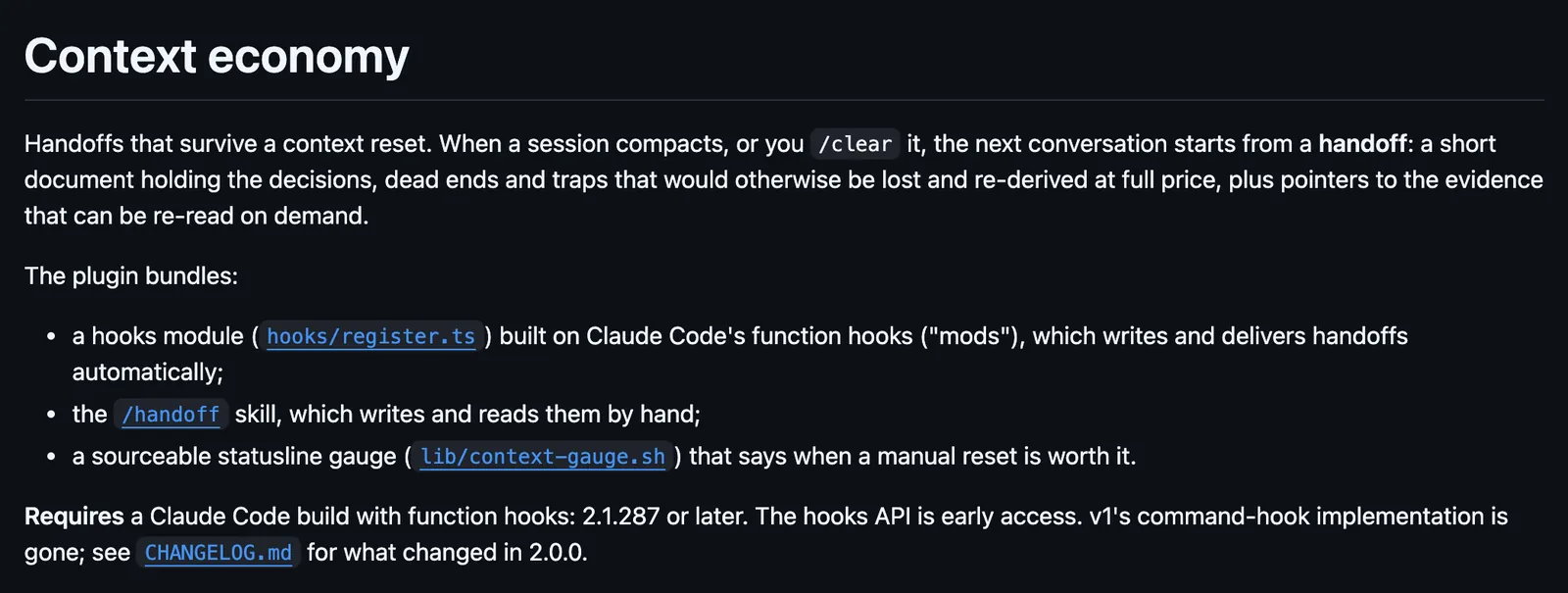
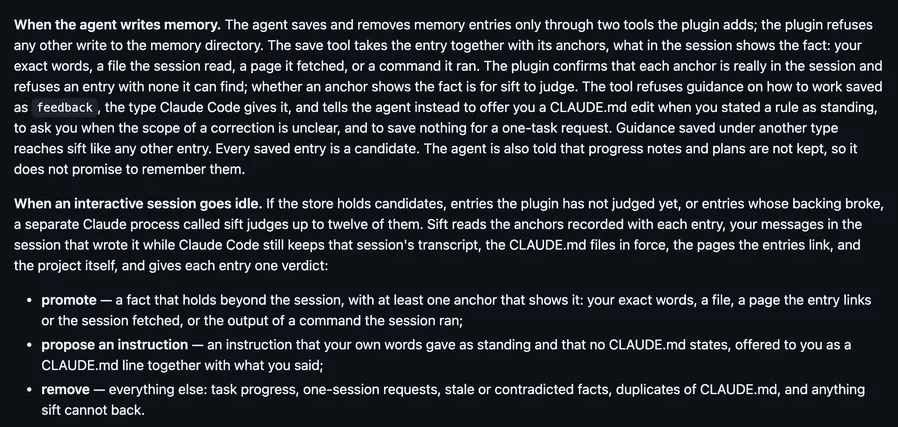
The marketplace, script-development-plugins, also holds core-skills and kendo-pm. Saving what a context reset would lose is why this page files it under workflow. handoff-compact, by trytofly94, replaces compaction with a structured handoff that a fork of the session writes, and saves it as a file. compact-keeper, by arasovic, saves a handoff file at each compaction with Claude Code's summary. This one runs each draft through a format gate and retries once, and keeps decisions, dead ends, and traps in words while anything with a path:line becomes a pointer the gate checks. Handoffs live in a machine-local store, one file per repository and branch, never committed. After /clear, the first prompt of the next conversation carries the handoff, marked consumed so it is not shown twice. /handoff writes one by hand, and a gauge you source into your own status line says when a manual reset is worth it.
Demo
Screenshot of the author's GitHub page.
What it hooks into
session.compactWhen the context is compacted
session.startWhen a session starts
session.endWhen a session ends
prompt.submitWhen you send a prompt
Read from the on() calls in its hook modules. Open its source under Files to check what each one does.
Files
The author's README and source, 4 files. They load when you open them.