section-team is a Claude Code workflow mod by Raouf.
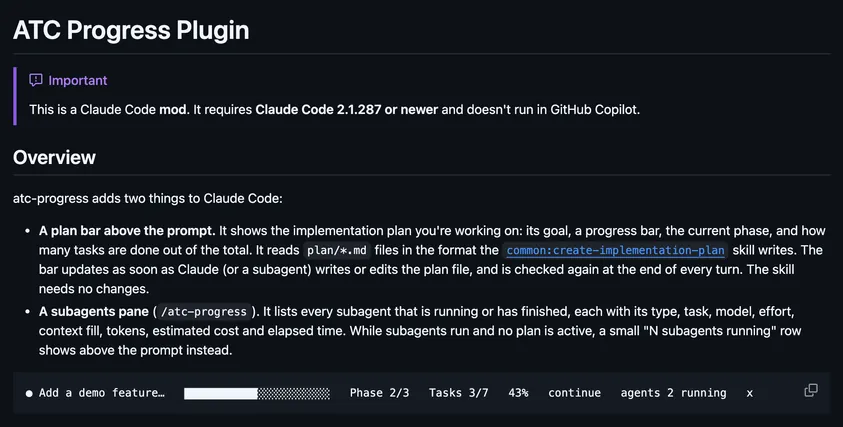
Runs the session as a supervisor that wakes specialist sections for bigger work, with a team strip above the prompt, a Team Board, and a reviewer gate on code.
It runs inside the Claude Code process. The side panel is only what the author's README names. Read the repo before you install, or run claude plugin validate on the plugin folder.
Version
0.1.1
License
MIT
Repo stars
14
Last change
2026-10-26
What it can reach
Draws in the session
Holds a command
Reads usage or context figures
Reaches the network or an outside service
Claude Code 2.1.275 or later for the one-line install. On older versions: /plugin marketplace add afel6/section-team, then /plugin install section-team@section-team. Access to the Claude 5 models: the sections and the reviewer run on Opus 5.5, the coder helper on Sonnet 5.5, and the scout helper on Haiku 5.5. Node.js for the hooks; the author tested v26. The author measures about 3.6 times the cost of plain Claude Code, on benchmark tasks the team was tuned on. Some sections preload skills when they are installed: frontend-design, tdd-workflow, security-review, claude-api, and web-design-guidelines. To work on it, clone the repository and start claude --plugin-dir with its path. In the desktop app the helpers run in the background. Reports and notes go under .team/ in each project, kept out of git.
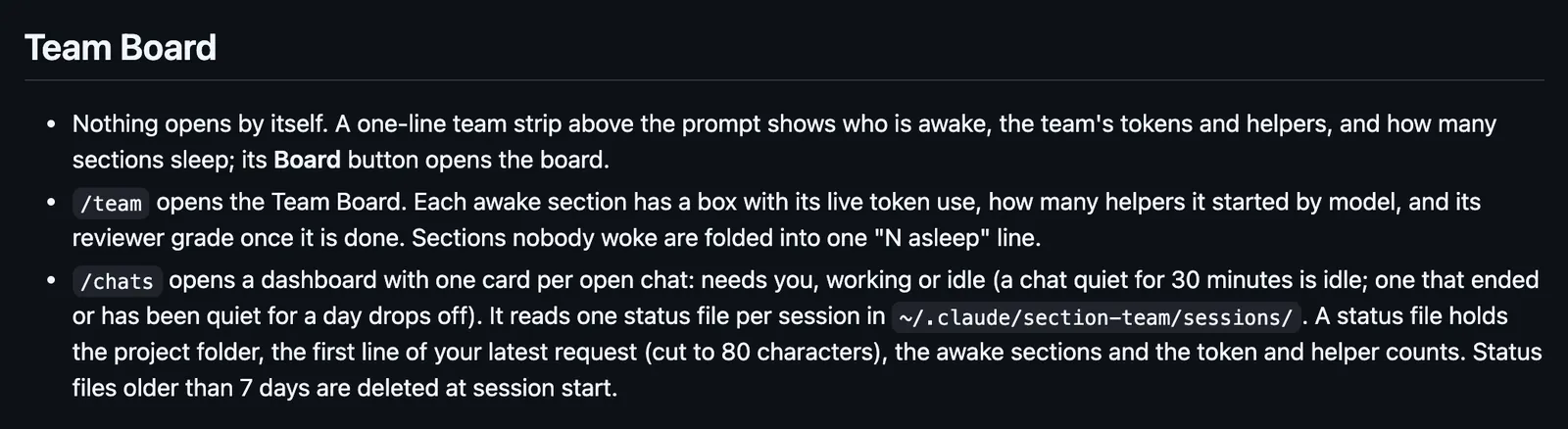
The marketplace name is section-team, and it lists this one plugin, from the repository. Waking and watching a team of subagents is why this page files it under workflow. litter runs multi-agent designs, gated plans, and swarms as workflows and holds each agent to its files and tools. switchboard picks the model for each subagent that names none. This one keeps small work in the session and wakes sections only for bigger work: ten builders and two read-only advisors, each handing tasks to Sonnet and Haiku helpers. A builder's code must pass the Opus reviewer before it is handed back. The strip shows who is awake and the team's tokens, the Board button and /team open the board, and /chats opens a card per open chat. The holds are settings hooks: a section's Agent call that asks for the background is refused, and so is a handback of changed code with no reviewer grade. A section that finds no installed skill searches skills.sh read-only, and names the skill instead of installing it.
Demo
Screenshot of the author's GitHub page.
What it hooks into
session.startWhen a session starts
session.endWhen a session ends
turn.startWhen Claude starts a turn
turn.completeWhen a turn ends
command.runWhen you run its slash command/team/chats
ui.closeWhen its pane closes
agent.spawnWhen a subagent starts
turn.stepAt each step of a turn
prompt.submitWhen you send a prompt
ui.renderDraws into the sessionAbovePromptPane
Read from the on() calls in its hook modules. Open its source under Files to check what each one does.