It runs inside the Claude Code process. The side panel is only what the author's README names. Read the repo before you install, or run claude plugin validate on the plugin folder.
Version
1.1.1
License
MIT
Repo stars
25
Last change
2026-10-14
What it can reach
Draws in the session
Reads usage or context figures
Holds a command
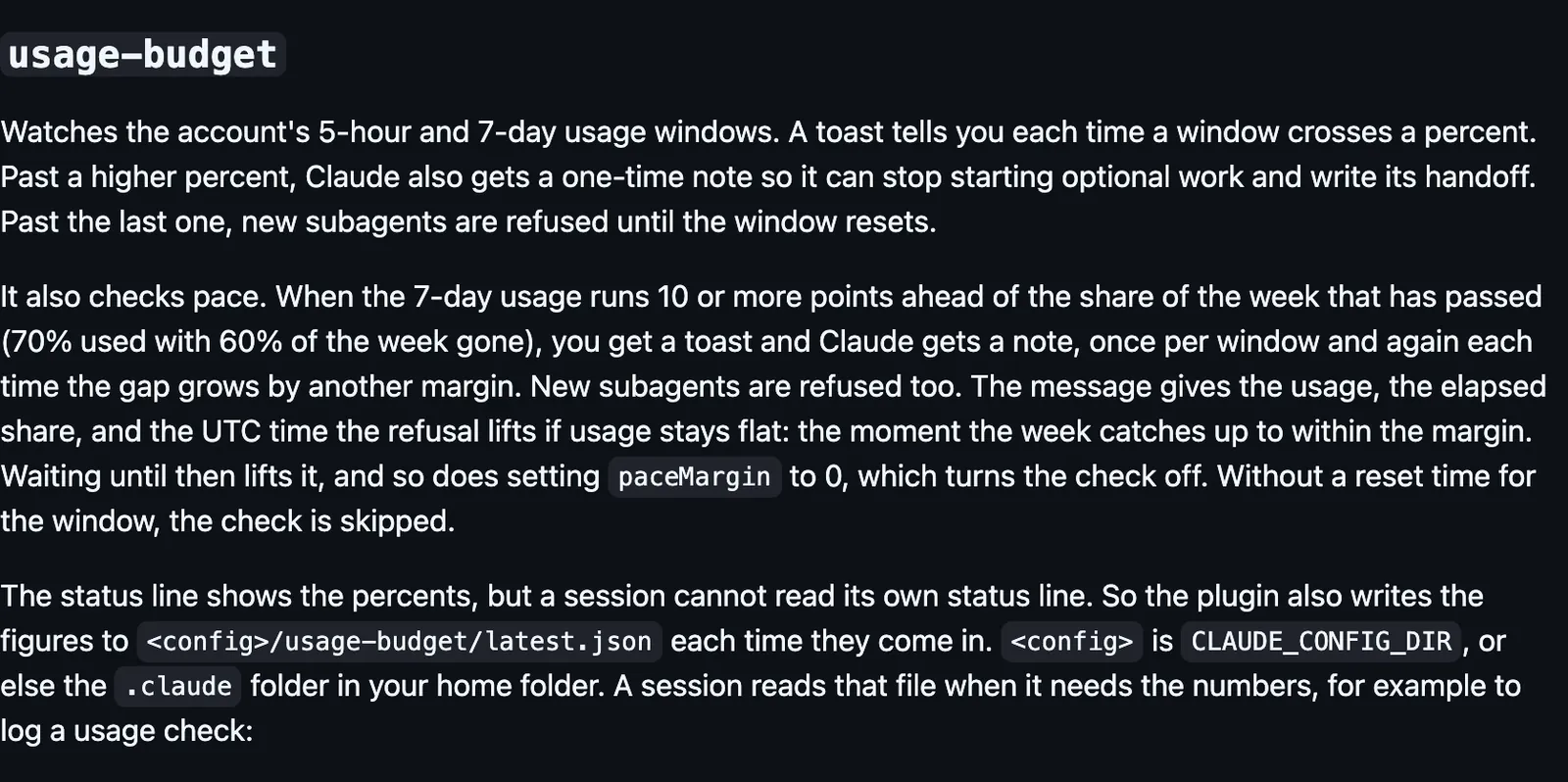
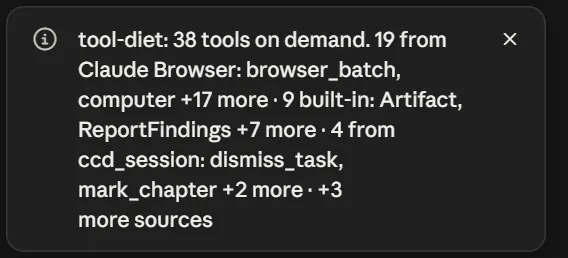
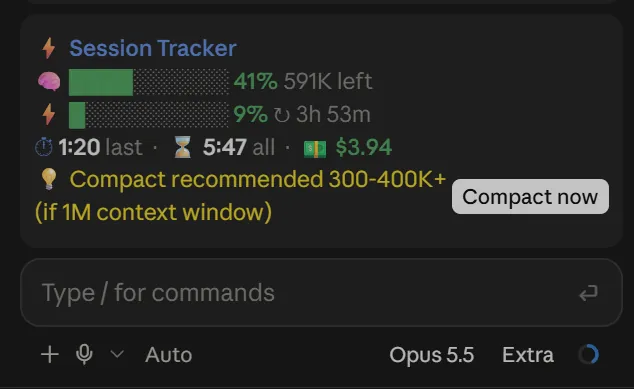
Needs a Claude Code version that loads plugin hook modules. Toasts fire at 70%, 85%, and 95% by default, once each per window. From 85% by default, Claude also gets a one-time note to stop starting optional work and write its handoff. A new subagent is refused when either window reaches 95% by default. It also checks pace: when 7-day usage runs 10 or more points ahead of the share of the week that has passed, you get a toast, Claude gets a note, and new subagents are refused until the week catches up, if usage stays flat. Each of these has an option, and 0 turns it off. The status line shows the percents, and the plugin writes them to usage-budget/latest.json in the Claude config folder so a session can read them.
The install name is usage-budget. This page adds the author's name. The marketplace name is erikdarling. The marketplace also holds open-asks, subagent-wall, and other mods. This one installs on its own. The marketplace source is ./plugins/usage-budget. The toast and the refused subagent are why this page files it under usage. cost-meter draws session cost, context fill, and the 5-hour and 7-day windows on the status line, plus what each turn cost. A budget, off until you set one, asks before the next tool call. This one toasts as a window crosses a percent and refuses a new subagent past 95% by default. The source adds the usage note beside the next tool result.
Demo
Screenshot of the author's GitHub page.
What it hooks into
session.measureWhen usage is measured
tool.callAround a tool call, where it can hold one
agent.spawnWhen a subagent starts
Read from the on() calls in its hook modules. Open its source under Files to check what each one does.
Files
The author's source, 3 files. They load when you open them.