All shelves / Mods / Workflow
ide-mod
By jkf87
ide-mod is a Claude Code workflow mod by jkf87.
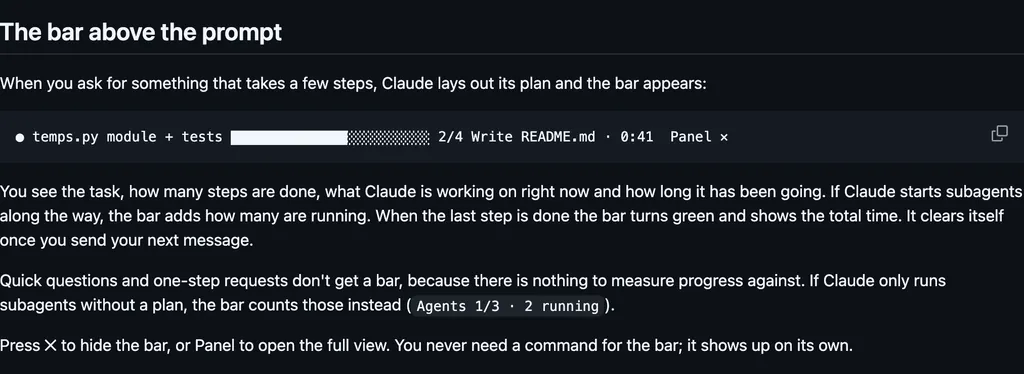
Opens an IDE window in the session, with an agent board, a file tree, and tabbed documents, and draws a usage gauge above the prompt.
Draws
Install
The marketplace name is ide-mod.
/plugin install ide-mod --marketplace jkf87/ide-modIt runs inside the Claude Code process. The side panel is only what the author's README names. Read the repo before you install, or run claude plugin validate on the plugin folder.
- Version
- 0.10.1
- License
- MIT
- Repo stars
- 7
- Last change
- 2026-10-13
What it can reach
- Draws in the session
- Reads usage or context figures
- Reads this turn's file edits
- Reaches the network or an outside service
- Sees tool calls
- Runs a command when you press
- Calls another program on this machine
On-screen words are Korean. Opens an IDE window in the session: an agent board of the main agent and its subagents, a file tree, and tabs for code, PDF, and HWP and HWPX, the Hangul word processor's document formats. A usage line stays above the prompt: this session's context, the last response's cache hit, tokens per second, and plan limits for Claude, Codex, Gemini, and Antigravity as one row of dot gauges, with the time left on the prompt cache. /ide auto on or off chooses whether a new session opens the window. That starts on. It needs Claude Code's function hooks. The README says it was made and tested on 2.1.290, and the API can change between releases. The window is view only. Files over 4 MB are not opened, and the tree expands to 3,000 lines. Claude's plan limits are the same usage response as /usage, read with the session's credentials once a minute, and only while the band is on screen. Tokens are not visible to the mod. If that read fails, it uses the 5-hour and weekly limits the engine reports on each response. Codex limits come from the Codex CLI app-server, asked every 5 minutes. Antigravity limits come from agy /usage, run by bin/agy-usage.sh, cached in ~/.cache/ide-mod and shared for 15 minutes. If the address that refreshes the agy login token does not resolve, it does not start agy, and a failure waits 30 minutes. The README says that is so a failed refresh does not ask you for a code. A CLI that is not installed leaves that group off the line. While you are idle, by default it resends the main conversation's last request just before the prompt cache expires, so the cache lives on. /cache now keeps it once, and /cache keep or /cache off changes how long. One keep costs about a cache read, about 10 percent of the input price, plus a few output tokens. On a subscription it counts a little against the limit. Keeping stops 2 hours after idle starts, by default, and a conversation under 20,000 tokens is left alone. The lifetime starts as an estimate, usually 1 hour on a subscription and 5 minutes with an API key, then is corrected from whether a later request was read from cache. While the board is on screen, a one-line agent summary uses Haiku, at most 3 times in 20 seconds, on your account. The s key turns those summaries off, and 3 failures in a row turn them off. The board names each agent's last tool call. Lecture subtitles above the prompt are built from tool calls, with no model call. Files Claude changed are marked in the tree and the tab, and an open file is read again. A refused or failed edit is not marked. Pressing another open Claude session sends the handoff text to that session as a message. The p key only puts @path in the prompt. /handoff receive with a link reads that page's handoff.json and only puts it in the prompt. The README says it does not send, because someone else wrote it. f or /handoff share writes a handoff, the goal, the work done, the decisions, what is left, cautions, and links, and posts it as a private Artifact. The README says you share it later from the claude.ai page's share menu. It is told not to include passwords, tokens, API keys, session keys, IP addresses, or emails, and your prompt text and uncommitted diffs stay out. Only the list of changed files goes in. The link stays private until you share it. While the board is showing, every 10 seconds it reads memory, swap, and disk with sysctl, vm_stat, df, and ps on macOS, or /proc/meminfo on Linux. HWP pages run through Node and bin/rhwp-view.mjs. rhwp is a Rust-to-WebAssembly HWP engine by Edward Kim, under MIT. PDF text uses pdf.js from Mozilla, Apache-2.0. Picture view uses poppler's pdftoppm. The README names brew install poppler. Pictures can also use rsvg-convert, resvg, or macOS qlmanage and sips. The o key opens the current page in macOS Preview. The request history can also list prompts from the same folder that you sent in Codex or in agy, read from those tools' local history. /style-gate judges a Korean draft longer than 50 characters, code blocks left out, as pass, warning, or stop, and shows that above the prompt. When it is on, it checks each time Claude writes a markdown or text file.
The install line has no @suffix. The marketplace name is ide-mod. The IDE window, with the agent board and the file tree, is why this page files it under workflow. nomoreide is an optional side pane that reads a separate local workbench's daemon. This one draws the IDE in the session, and the usage gauge is drawn with it. A share to another person posts a private Claude Artifact, which is where that path's data goes. The Codex and Antigravity limits come from those tools' own CLIs, on their own logins. The Claude usage read is the same response as /usage on this login. The Haiku summaries and a cache keep are model calls on your own login.
Demo
What it hooks into
session.endWhen a session endsturn.startWhen Claude starts a turnturn.stepAt each step of a turnagent.spawnWhen a subagent startsturn.completeWhen a turn endsui.scrollA Claude Code eventPane
Read from the on() calls in its hook modules. Open its source under Files to check what each one does.
Files
The author's README and source, 4 files. They load when you open them.
Facts
- Author
- jkf87
- Category
- Workflow
- Marketplace
- ide-mod
- Repo
- jkf87/ide-mod
- Version
- 0.10.1
- License
- MIT
- Repo stars
- 7
- Last change
- 2026-10-13
- Language
- TypeScript
- Files
- 197