It runs inside the Claude Code process. The side panel is only what the author's README names. Read the repo before you install, or run claude plugin validate on the plugin folder.
Version
0.5.1
License
MIT
Repo stars
9
Last change
2026-10-08
What it can reach
Draws in the session
Reaches the network or an outside service
Sees tool calls
Calls another program on this machine
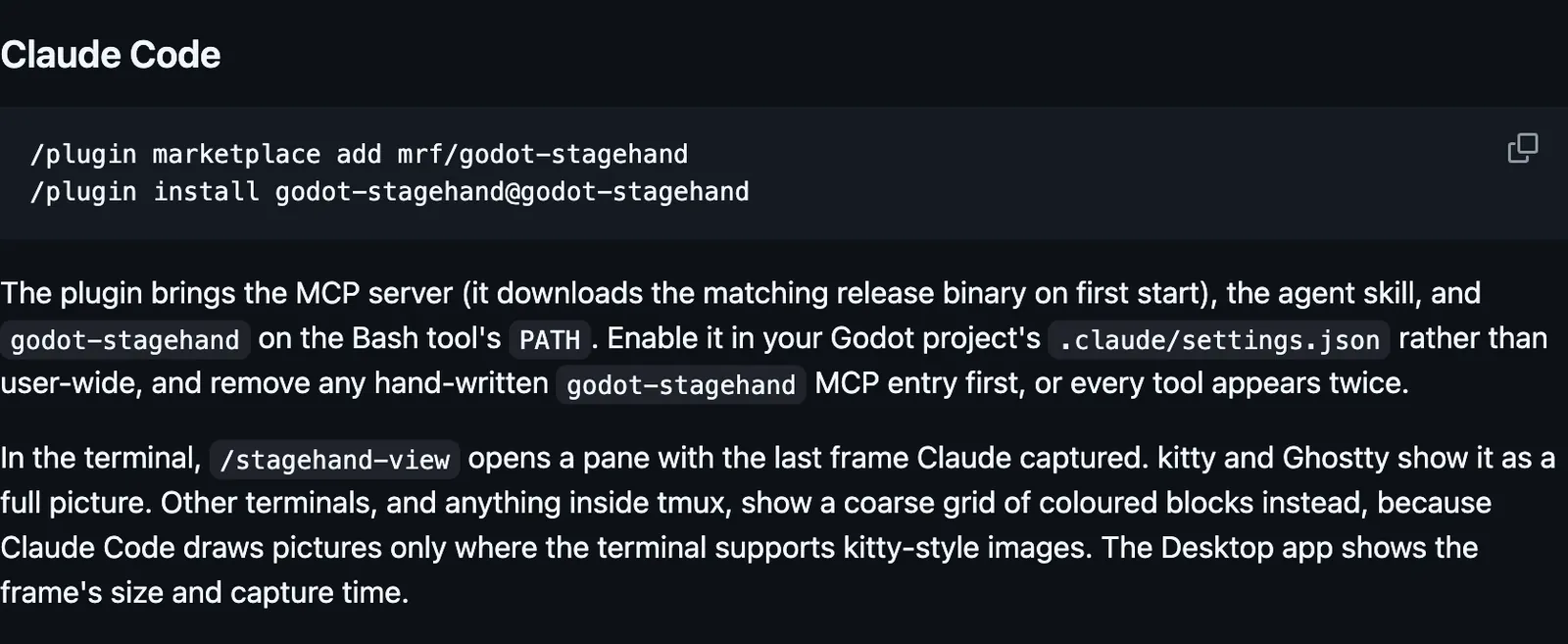
Godot Stagehand drives a running Godot game from outside the engine. This plugin is its Claude Code install. It brings an MCP server, which downloads the matching release binary from GitHub on first start, a skill, and godot-stagehand on the shell PATH. You can point binary_path at an existing binary instead of that download. Enable the plugin in the Godot project's .claude/settings.json rather than for every project, and remove any hand-written godot-stagehand MCP entry first, or every tool appears twice. The game listens on 127.0.0.1 and rejects a command until the session token is supplied. The README says that listener is a dev control plane, not a hardened endpoint, and to read the security notes before exposing it. A status line shows stagehand and connected, or how many games are connected. With none, the pane says no game is connected. /stagehand-view opens a pane with the last frame Claude captured. kitty and Ghostty show the picture. Other terminals, and anything inside tmux, show a coarse grid of colored blocks. The Desktop app shows the frame's size and capture time, not the picture. Refresh frame and Re-read status call the plugin's own screenshot and status tools.
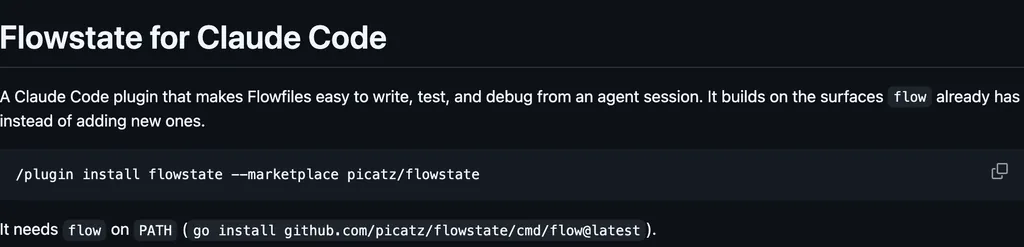
The plugin folder has no README. These lines are the repository README. Godot Stagehand is a Go tool that drives a running Godot game, in the role Playwright has for a browser. This folder is its Claude Code mod. The MCP server and the skill work without the mod. The download from GitHub is the network access. The game's listener on 127.0.0.1 is the local program. Refresh frame calls the plugin's own screenshot tool, so this page does not list runs-commands. The frame updates after a Stagehand tool returns, so this page does not list a hold.
Demo
Screenshot of the author's GitHub page.
What it hooks into
tool.callAround a tool call, where it can hold one
ui.renderDraws into the sessionAbovePromptPane
command.runWhen you run its slash command/stagehand-view
session.startWhen a session starts
Read from the on() calls in its hook modules. Open its source under Files to check what each one does.
Slash commands 1
/stagehand-viewShow the last game frame Claude captured and the Stagehand connection
Files
The author's source, 3 files. They load when you open them.