It runs inside the Claude Code process. The side panel is only what the author's README names. Read the repo before you install, or run claude plugin validate on the plugin folder.
Version
0.1.0
License
MIT
Repo stars
23
Last change
2026-09-18
What it can reach
Reaches the network or an outside service
Calls another program on this machine
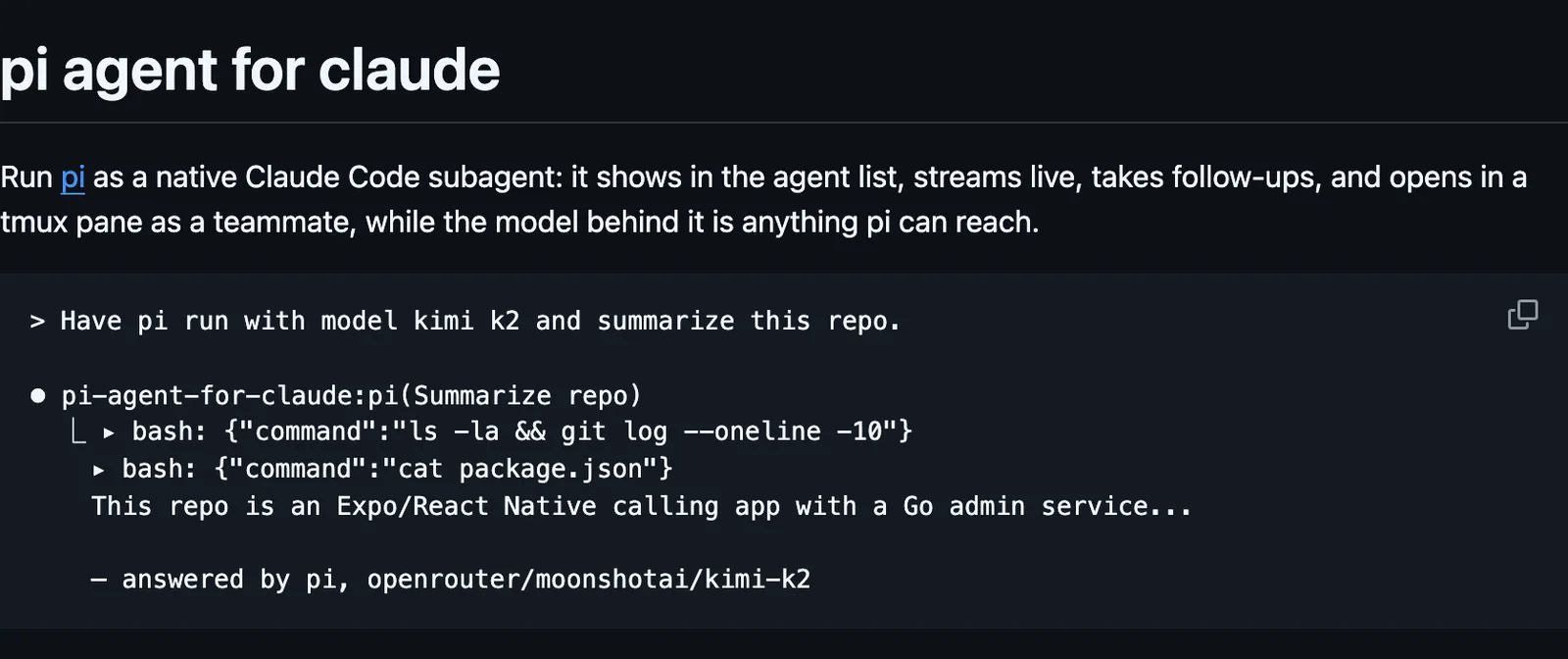
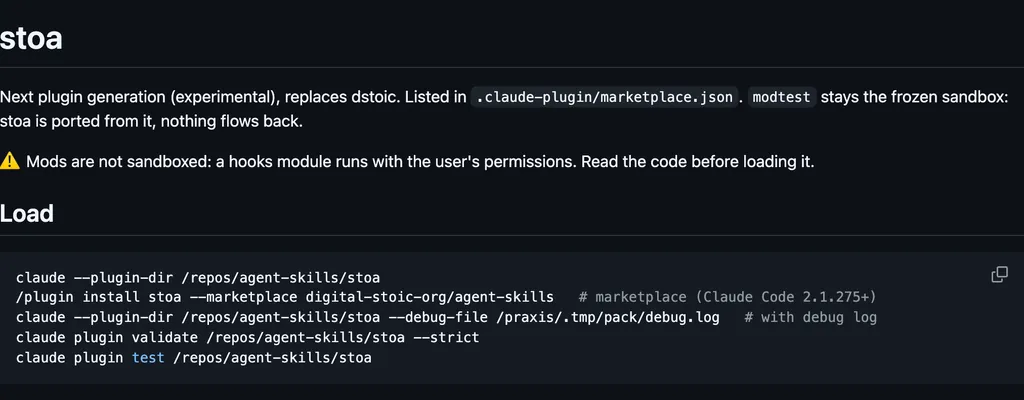
Needs Claude Code 2.1.275 or newer, pi logged in to at least one provider, Node.js, and macOS or Linux. Teammate panes need tmux. Put CLAUDE_CODE_ENABLE_FUNCTION_HOOKS set to 1 and CLAUDE_CODE_EXPERIMENTAL_AGENT_TEAMS set to 1 under env in ~/.claude/settings.json, and set teammateMode to tmux; the official docs say 2.1.287 and later ignore CLAUDE_CODE_ENABLE_FUNCTION_HOOKS. Install, then restart. The plugin replaces the subagent's model requests with a detached pi --mode json run, so those requests go to whatever provider pi is logged in to. When you name a model, Claude adds a pi-model line, passed to pi --model. Follow-ups continue that pi session. pi streams its text, thinking, and tool calls as the Agent tool's own result. pi runs its own read, bash, edit, and write tools outside Claude Code's permission prompts, so a pi agent can change files without asking. ps detects teammates. A checkout starts with claude --plugin-dir /path/to/pi-agent-for-claude.
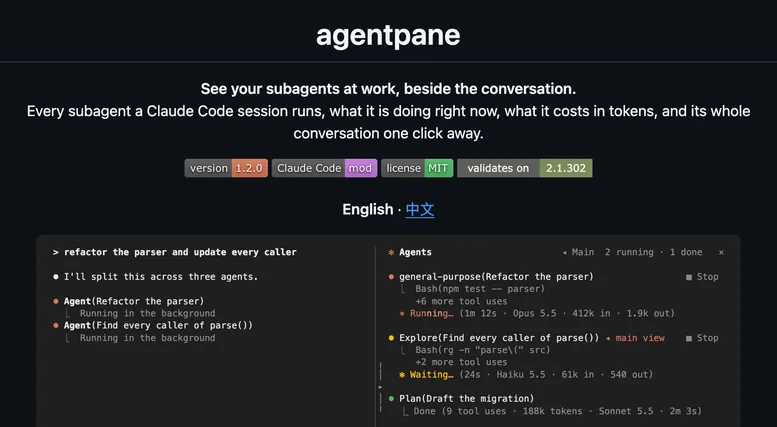
The plugin is the repo root. It draws no band or pane of its own: the agent list, the live stream, and the tmux pane are Claude Code's, fed by the pi run. The tool calls it streams are pi's, not Claude's. It denies its own pi_progress tool only when no pi run is active, which the README does not describe as a hold.
Demo
Screenshot of the author's GitHub page.
What it hooks into
session.startWhen a session starts
tool.callAround a tool call, where it can hold one
agent.spawnWhen a subagent starts
turn.stepAt each step of a turn
Read from the on() calls in its hook modules. Open its source under Files to check what each one does.
Files
The author's README and source, 4 files. They load when you open them.